...
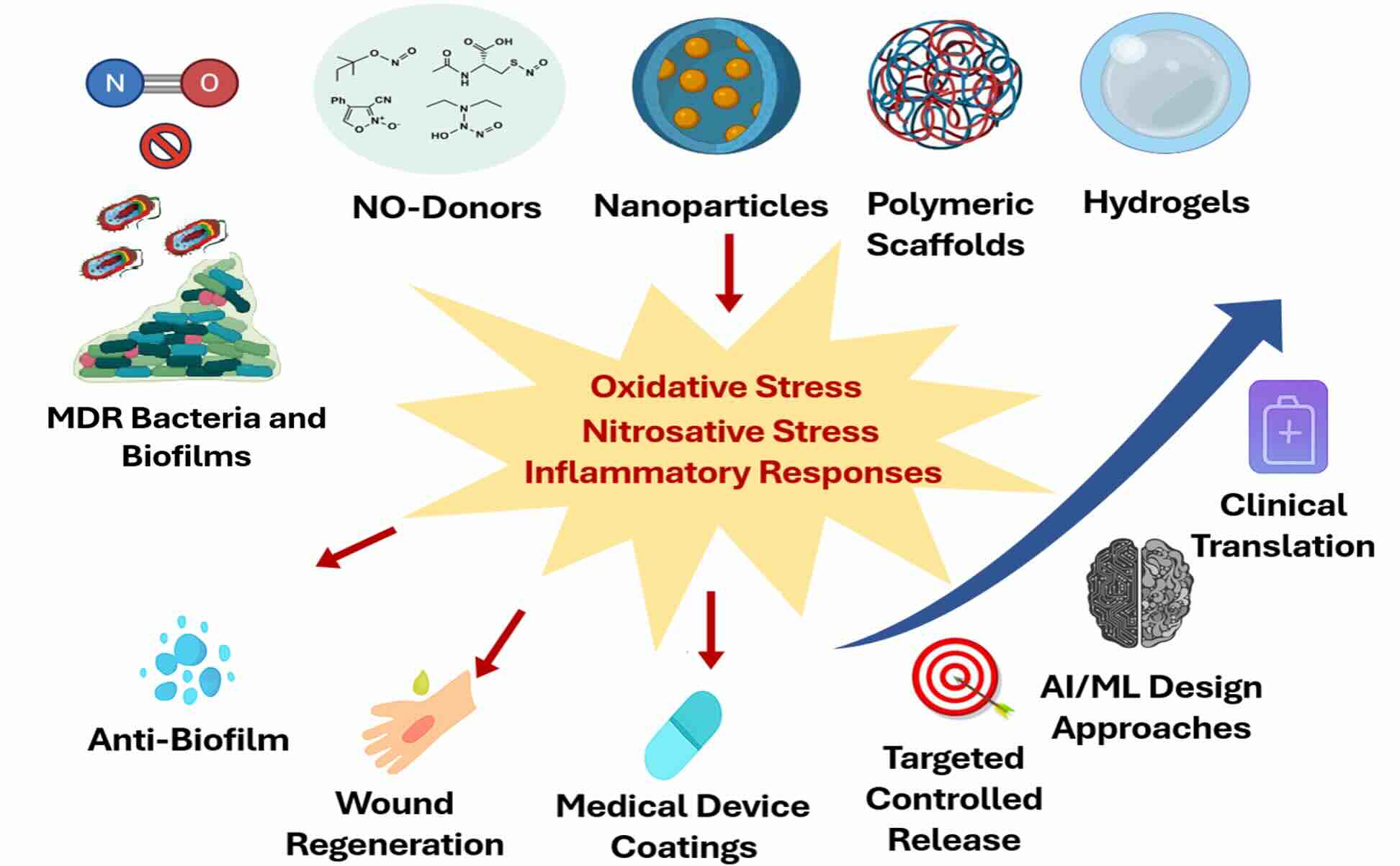
Nitric Oxide in Antibacterial Therapy: Advances in Delivery Systems and Future Prospects
Grace Kaul a Asmita Shrestha b and Sandeep Verma*a

Prayogic Rasayan 2025, 9(3), 46-66

DOI: https://doi.org/10.53023/p.rasayan-20251028

Keywords: Nitric Oxide (NO), Antibacterial Therapy, NO Delivery Systems, Biomedical Applications

Nitric oxide is a crucial gasotransmitter with a diverse range of physiological functions, notably including its significant antimicrobial properties. This review succinctly summarizes its antibacterial mechanisms and current advancements in NO delivery systems pertinent to infection-associated biomedical applications. Furthermore, it explores the challenges associated with NO delivery, emphasizing how computational and machine learning-based approaches can aid in overcoming these limitations by optimizing design and predicting efficacy.


...
Synthetic Approaches to Potent Bioactive Natural Product Haouamine A: A Key Ascidian Diterpenoid from Aplidium haouarianum
Diksha Bansal, Pooja Sivaganesan, Chibisree Elanchezhian Tohiruddin Sardar and Mrinal Kanti Das*

Prayogic Rasayan 2025, 9(3), 67-81

DOI: https://doi.org/10.53023/p.rasayan-20251015

Keywords: Marine natural product, Anticancer activity, 3-aza-[7]-paracyclophane, Ring strain, Dynamic isomerism, Structure-activity relationship (SAR).

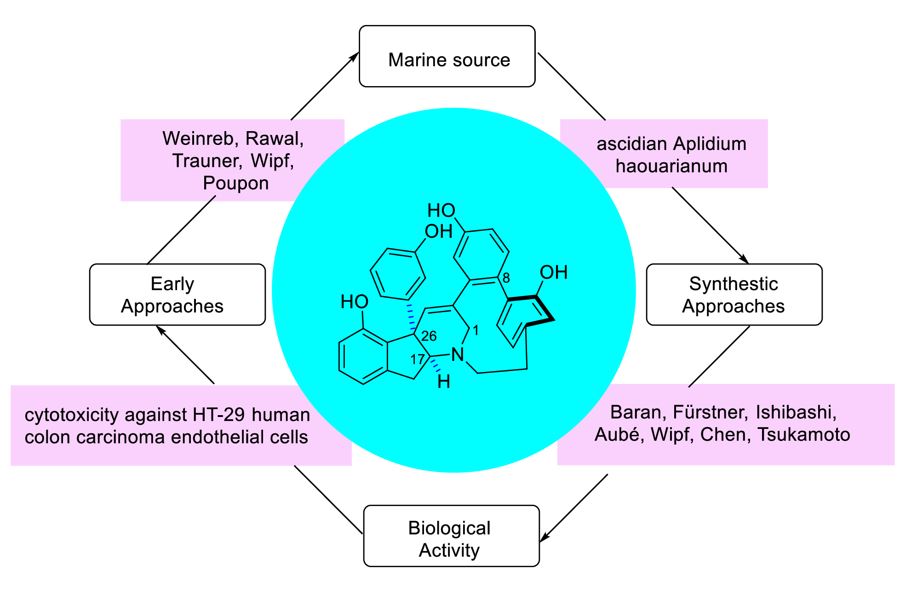
Haouamine A, a structurally unique ascidian diterpenoid isolated from the marine tunicate Aplidium haouarianum, exhibits potent cytotoxicity against HT-29 colon carcinoma cells (IC50 = 0.1 μg/mL). Its unprecedented 3-aza-[7]-paracyclophane core, featuring planar chirality and severe ring strain (14–15.6 kcal/mol), poses significant synthetic challenges due to dynamic isomerism (nitrogen inversion) and a congested quaternary centre. This review chronicles two decades of synthetic campaigns, showcasing a diversity of strategic solutions to the formidable challenges posed by haouamine A’s architecture. Key breakthroughs include Baran’s pyrone-alkyne DielsAlder macrocyclization (8-step racemic synthesis), Fürstner’s asymmetric Heck cascades, and Chen’s strain-accelerated late-stage oxidation. Modular approaches (e.g., Tsukamoto’s Pd-catalyzed "anti-Wacker" cyclization) and biomimetic insights further enriched the synthetic toolbox. Despite these achievements, the biosynthetic origin of haouamine A remains enigmatic, with proposed unconventional tyrosine modifications or unknown enzymatic pathways. Synthetic advances enabled the gram-scale production, configurational assignment (8R,17S,26S), and biological validation of this compound, underscoring its potential as an anticancer scaffold. This work exemplifies how complex natural products drive methodological innovation, offering a paradigm for targeting strained architectures in drug discovery. Future directions include the elucidation of biosynthesis and the development of analogs to optimize bioactivity


Graphical Abstract
Hesperidin and Polycystic Ovary Syndrome (PCOS): Molecular Protection Beyond Conventional Therapy
Sananda Sil and Sandip Chattopadhyay*

Prayogic Rasayan 2025, 9(3), 82-XX

DOI: https://doi.org/10.53023/p.rasayan-20251228

Keywords: PCOS, Hesperidin, Oxidative Stress, Insulin Resistance, Inflammation, Apoptosis, gut-biota

Polycystic ovary syndrome (PCOS) is a heterogeneous endocrine–metabolic disorder driven by complex interactions between ovarian dysfunction, insulin resistance, chronic inflammation, oxidative stress, and gut microbial dysbiosis. Current therapies address isolated symptoms and are often associated with adverse effects, prompting interest in bioactive natural compounds with multi-target potential. Hesperidin (HSP), a citrus flavanone widely investigated for its antioxidant, anti-inflammatory, metabolic, and immunomodulatory properties, has gained attention as a candidate for PCOS management. This review synthesizes experimental evidence demonstrating that HSP improves ovarian morphology, supports follicular development, modulates sex-steroid and gonadotropin profiles, and enhances oocyte developmental competence. HSP additionally attenuates oxidative injury, inflammatory cascades, and apoptosis in ovarian and metabolic tissues through regulation of Nrf2, NF-κB, Bax/Bcl-2, and caspase pathways. Metabolically, HSP improves insulin signaling, glucose tolerance, and lipid profiles while suppressing hepatic lipogenesis and promoting fatty acid oxidation. Recent studies further highlight its capacity to modify gut microbial composition, strengthen mucosal barrier function, increase short-chain fatty acid production, and reduce endotoxin-driven inflammation. Together, the findings indicate that HSP engages multiple mechanistic axes relevant to PCOS pathophysiology. However, clinical validation remains limited, underscoring the need for human trials to establish therapeutic applicability.